Occupational health and safety – for the Earth and the Moon
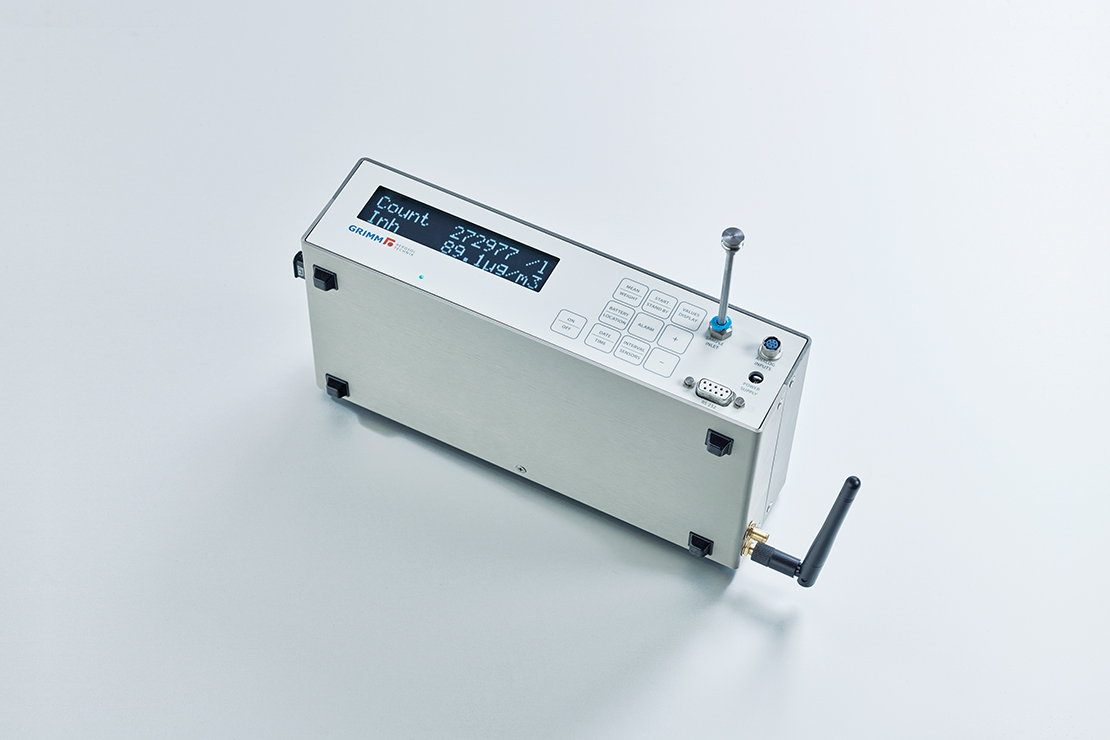
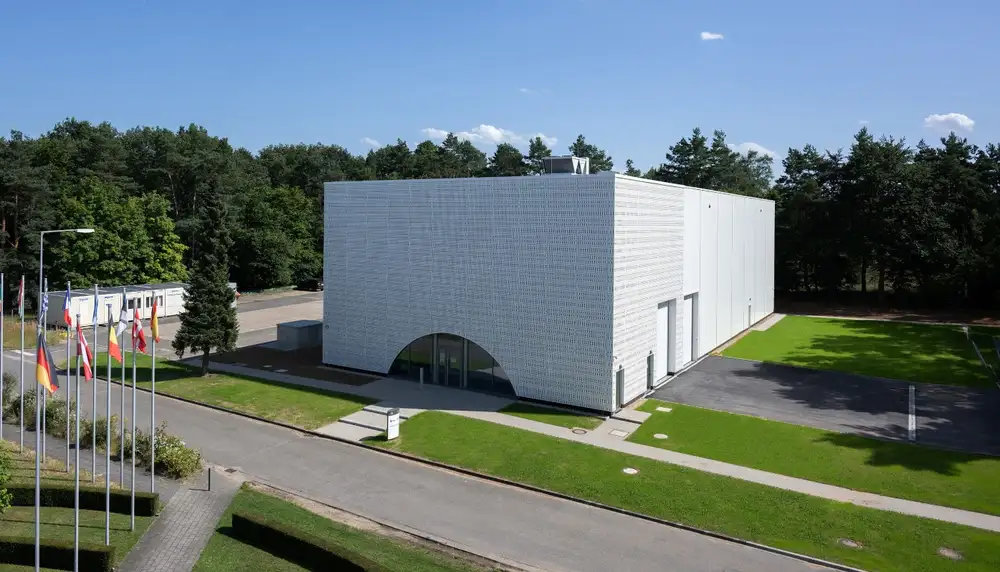
The LUNA training facility in Cologne is used to prepare for future human and robotic lunar missions. The facility is a cooperative project between the German Aerospace Center (DLR) and the European Space Agency (ESA). At this forward‑looking site, one of our measurement instruments is in use: the portable aerosol spectrometer 11‑D from GRIMM AEROSOL TECHNIK, a company of the DURAG GROUP. It is intended to provide insights into how dust affects people and the technology they use inside a lunar habitat.
At a glance
|
“The dust lab is the miniature version of the hall for targeted dust investigations”
LUNA, the internationally recognized competence center for lunar activities, is an important German European contribution to space research. The training facility in Cologne is a collaboration between ESA and DLR. Equipped with specialized infrastructure and connected to the campus, complex simulations of future astronaut and robotic activities on the Moon have been conducted there since 2024. Tools are tested, surface operations simulated, and – in short – everyday work on the Moon is practiced.
To better understand how dust exposure during a lunar mission affects scientific teams as well as their equipment and experiments, the LUNA research project includes a dedicated investigation area. GRIMM AEROSOL TECHNIK Area Sales Manager Achim Edfelder spoke with ESA specialist Jürgen Schlutz about how the GRIMM 11-D is used. Schlutz works at LUNA as a Facility Development and Utilisation Engineer and is responsible, among other things, for selecting the specialized equipment used.
"We want to understand how dust behaves in this environment"
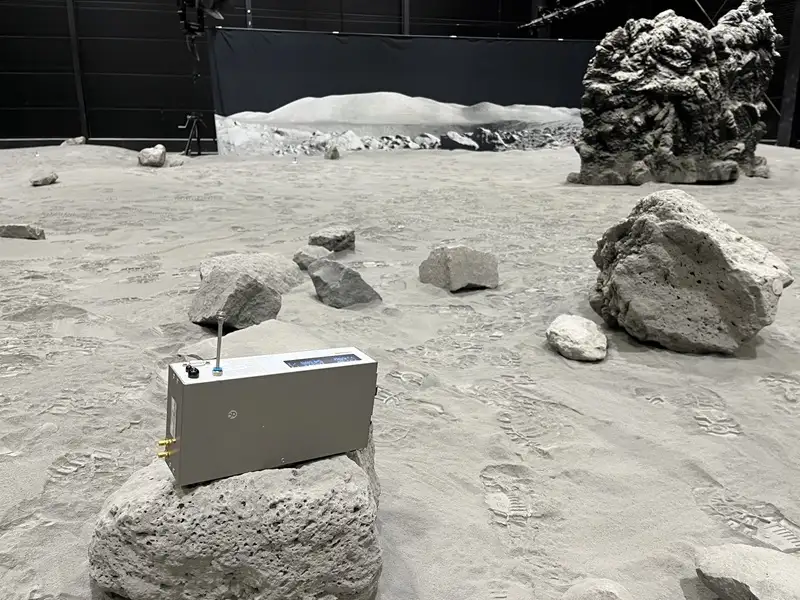
Achim Edfelder: Mr. Schlutz, at LUNA you are using the mobile aerosol spectrometer 11‑D from GRIMM AEROSOL TECHNIK. What exactly is the purpose of its application?
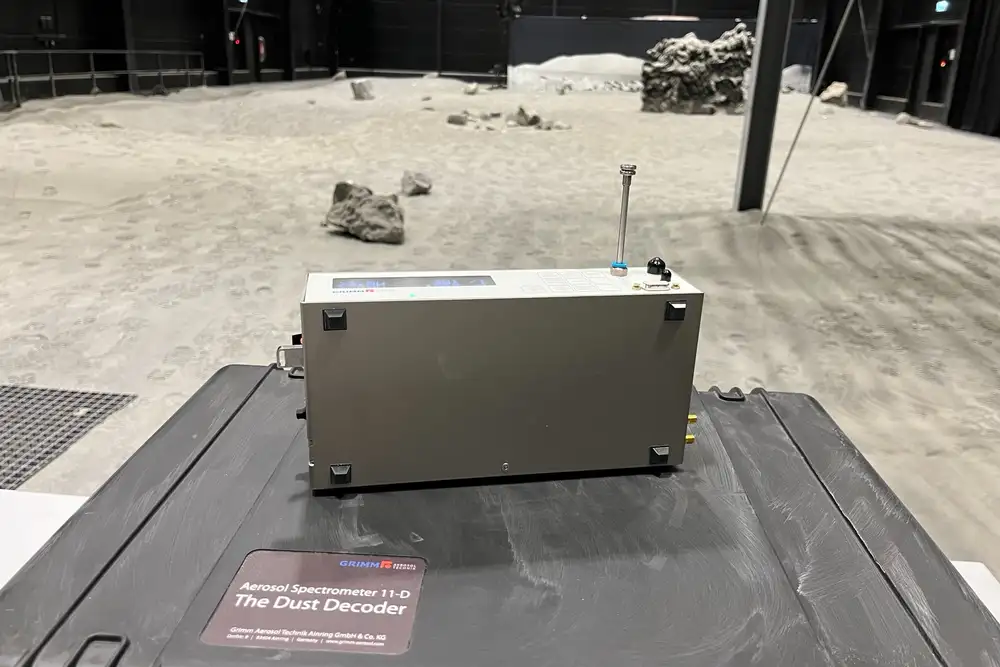
Jürgen Schlutz: In our LUNA lunar hall in Cologne, dust generation is naturally part of the environment. Accordingly, we carried out a hazard assessment for the staff who regularly enter the facility. We want to understand how dust behaves in this environment. For this reason, we developed procedures to apply whenever we perform activities that generate dust. We want to know how much dust is created, how quickly it settles again, and how long we must wait before we can start the next activity. With the help of the 11‑D, we can now check all of this reliably.
Can this actually provide insights into potential dust behavior on the lunar surface?
To some extent, yes. With our regolith simulant (a lunar dust imitation), we create a nearly identical dust environment as on the Moon. However, we naturally do not have real lunar dust, nor the same electrostatic charging as on the Moon; we have an atmosphere instead of a vacuum, and Earth’s gravity is higher. This means we must always carefully check how transferable the results are. What we are already practicing and studying in the hall is what’s called dust mitigation – the reduction, containment, or even prevention of dust. At LUNA, we are implementing measures to understand lunar dust exposure and incorporate it into operational procedures. This includes, for example, entering and leaving the station as well as keeping and maintaining equipment clean. The next step is to test various options for dust reduction and avoidance, such as optimal dust removal from equipment.
"What needs to be understood on the Moon is the issue of dust entering a habitat"
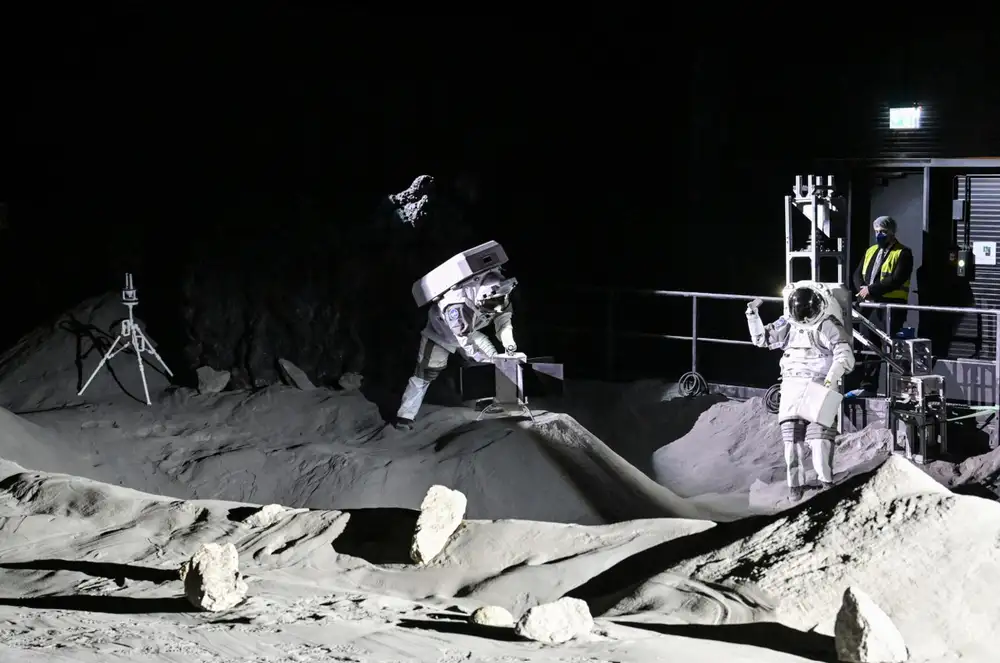
How and where exactly is the GRIMM 11‑D used at LUNA?
We already use smaller sensors attached to the spacesuit. These work with a green‑orange‑red color code that gives us information about dust exposure as we walk through the test field. But the results from the 11‑D are far more accurate and reliable in terms of what is measured and how. The 11‑D is also intended to serve as a reference device for these sensors so that we can better interpret their readings.
Why do you need such detailed insights into dust exposure?
We differentiate between the use case on the Moon and the one inside the LUNA hall. In Cologne, the focus is primarily on occupational safety and the rules and conditions we want to maintain. Specifically, we regularly reshape the surface and adapt it for different simulations. When the regolith is rearranged and the test field is prepared, dust‑generating activities occur.
On the Moon, some of this applies as well, although it is less relevant outdoors. EVAs (extravehicular activities) always take place in sealed spacesuits that prevent dust ingress. What needs to be understood on the Moon is the issue of dust entering a habitat. When astronauts go outside wearing the suit and return, they bring back a suit loaded with dust, along with contaminated tools and samples.
"By deliberately stirring up dust, we simulate short‑ and long‑term exposure to lunar dust"
Are there already approaches to solve this issue?
This effect, known as dust ingress, is usually reduced by airlock or vestibule systems. If we think back to the 1969 Apollo mission, we remember images of astronauts re‑entering the capsule without any kind of cleaning – their faces grey from lunar dust. They had no airlock and brought large amounts of dust into the capsule. This is exactly what future lunar missions want to avoid. We therefore want to understand how dust propagates from outside into a habitat and how this can be prevented.
What specific investigations do you carry out in the LUNA hall?
We have a separate, enclosed 20‑square‑meter room inside the hall. In this dust lab, we can deliberately stir up dust and then examine seals, bearings, and mechanical components to see how lunar dust could theoretically settle on equipment and affect these systems. The dust lab is a miniature version of the entire LUNA hall. We can introduce different simulants and dust mixtures there. By deliberately stirring up dust, we simulate short‑ and long‑term exposure of various materials to lunar dust. Measurements and observations are taken both visually through a window and using various instruments inside.
"We were convinced by the overall package"
Why did you choose the GRIMM 11‑D for these tests?
We were convinced by the overall package. This especially applies to its measuring accuracy, which has been tested and verified by METAS, the Swiss Federal Institute of Metrology. This was the decisive factor for us to use the 11‑D as a reference system.
Additionally, the 11‑D is both mobile and stationary, allowing flexible use throughout the hall. It can be read out wirelessly via Bluetooth or via a connected network. This enables efficient integration into the hall’s monitoring systems. The data is displayed later in our control center, ensuring continuous measurement.
Further information
- Project Lead DURAG GROUP: Achim Edfelder, Area Sales Manager at GRIMM AEROSOL TECHNIK
- Project Lead LUNA: Jürgen Schlutz, ESA, LUNA Facility Development and Utilisation Engineer, Directorate of Human and Robotic Exploration
- LUNA Project Website (ESA & DLR): https://luna-analog-facility.de/
- Image credits: © ESA/DLR